A Farmer Who Doesn’t Rush the Bees
The taste of fresh clementines and honey on an autumn afternoon. A man and his pack, taking their time, because that’s the way of the land.
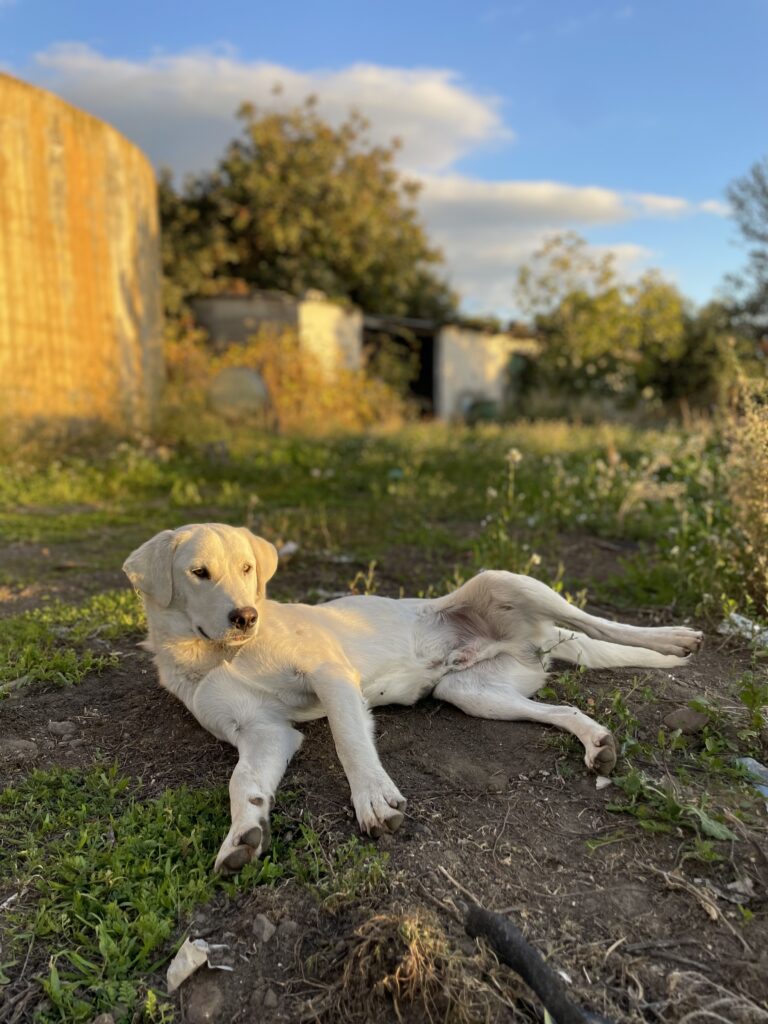
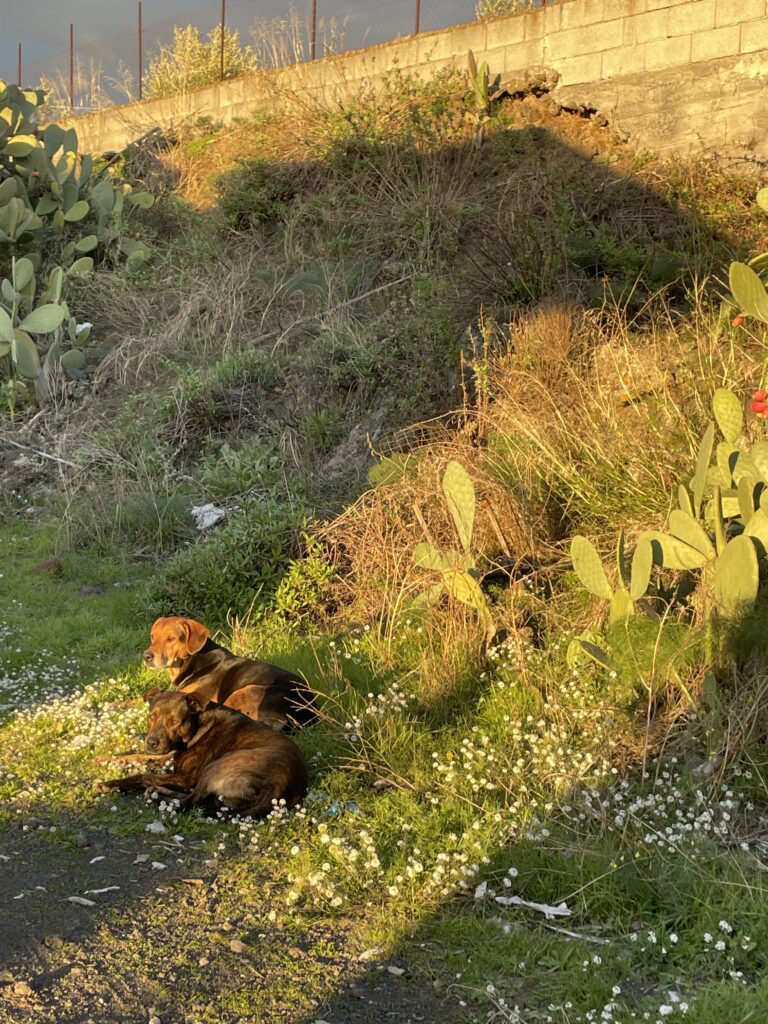
Last Sunday, after lunch, we drove out to my father-in-law’s farm so he could feed the dogs. He never skips this, whatever else the day looks like. As he opened the gates, five magnificent dogs came out to greet him, calm and composed, almost as if they’d been expecting him. They trailed behind him towards the barn while we followed in the car.
The late afternoon light caught them as they moved, golden and low. For a second the scene had something almost sacred about it. Five wild animals, following one man, the land quiet around them. Like a small kingdom and he, its quiet keeper.
It took me straight back to my first visit to the farm, last November.
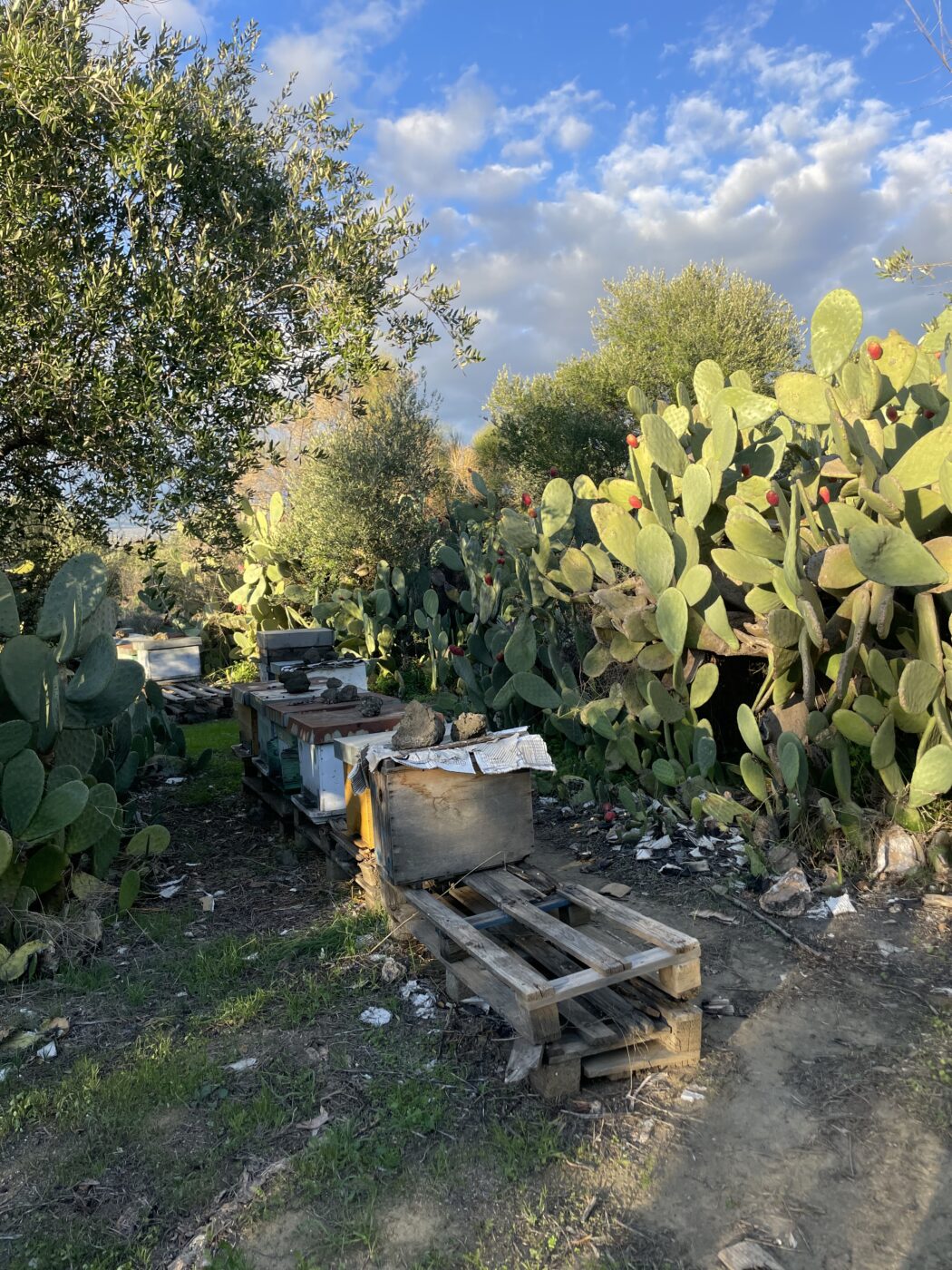
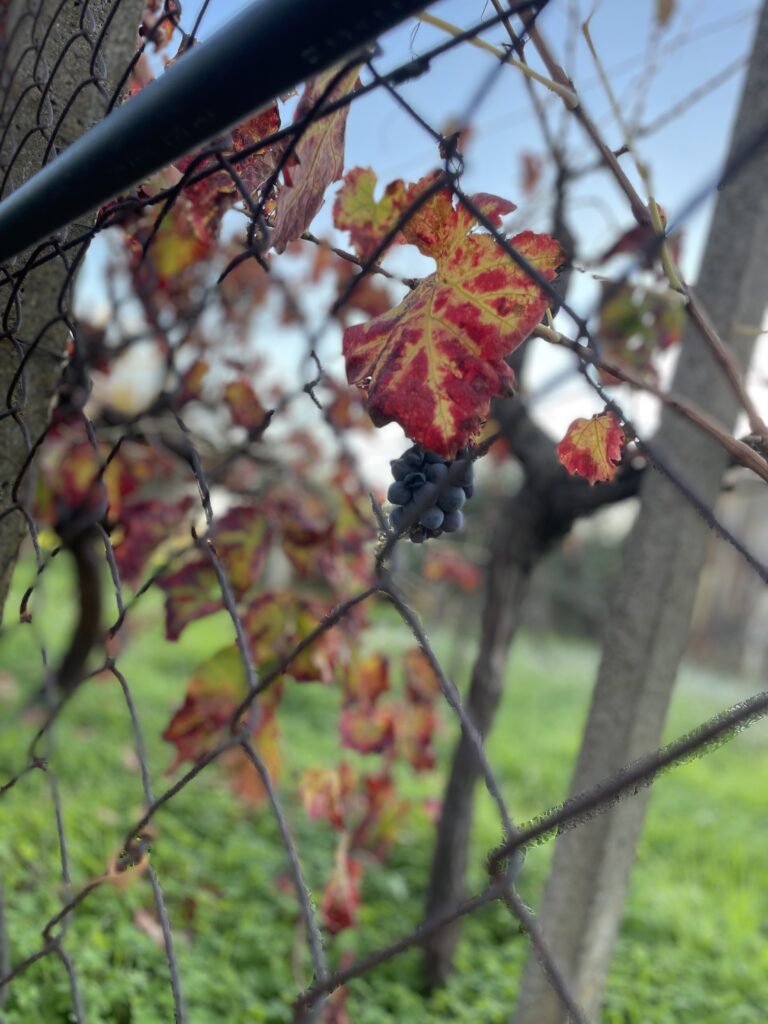
The vines were bare that day too. The sky had that particular shade of blue you get in Sicilian autumn, clear and cool. The prickly pears were enormous, flat green paddles crowding the path, and somewhere close by the beehives were already humming with work.
I asked him how long he’d had the farm. He thought about it, then answered, “more than thirty years. Before Cesare was born.”
I asked what the farm meant to him. He looked around slowly, as though the answer were somewhere out there in the land itself.
“It’s where I come to be alone”, he said. “To relax and get away from the world. It is my special place.”
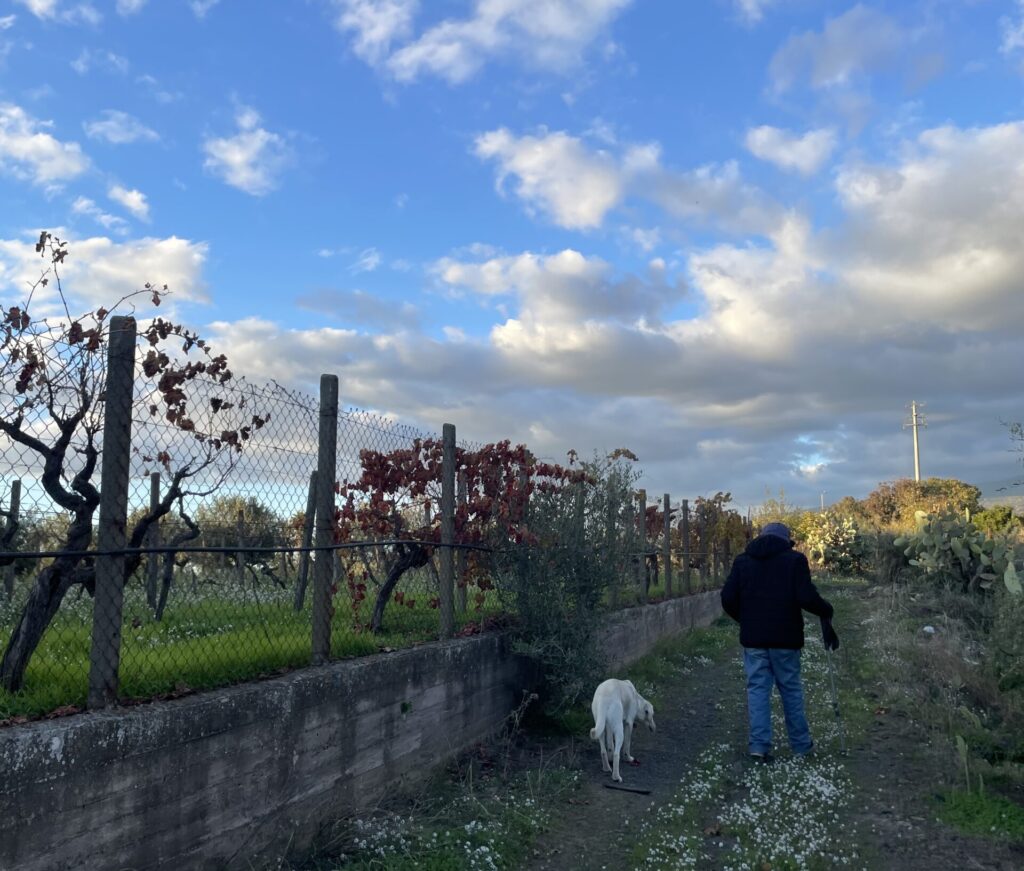
He used to bring my partner here as a small child. “He used to play with the horses,” he told me, smiling. Back then there were two horses, a pony, chickens, goats and pigs. I asked what happened to them.
“As you get older,” he said simply, “things become harder to keep. One by one they went.”
There wasn’t sadness in how he said it. More the ease of someone who understands that things run their course.
Now it’s oranges, olives, prickly pears, honey and the dogs. He shows up, feeds them, takes the tractor around to check on things, stops by the beehives. Even during his years as an architect and later a lawyer, he still came here. The farm was never separate from his career. It ran alongside it the whole time, quietly.
He’s one of the more remarkable people I’ve met since being in Sicily. He moves through the land so naturally, pointing things out, checking on this and that, the way people do when truly at home.
At one point he gestured toward the trees and told me to help myself. I reached for some tiny clementines, nothing like the ones from a supermarket, peeled one right there, and ate it on the spot. Perfect balance of sweet and tart. I had two more. Later he brought out honey from his hives, thick, raw, cloudy with pollen, the best I’ve ever tasted. I found myself imagining it on sourdough with salted butter, some future morning.
There’s something incredible about picking fruit off a tree and eating it right away, or cutting honeycomb straight from the hive. No packaging. No transit. No middleman. Just the tree, the hive, my hand and my mouth. I stood there for a moment, struck by how simple the whole thing was, and quietly promising myself to live this way eventually. Intentionally.
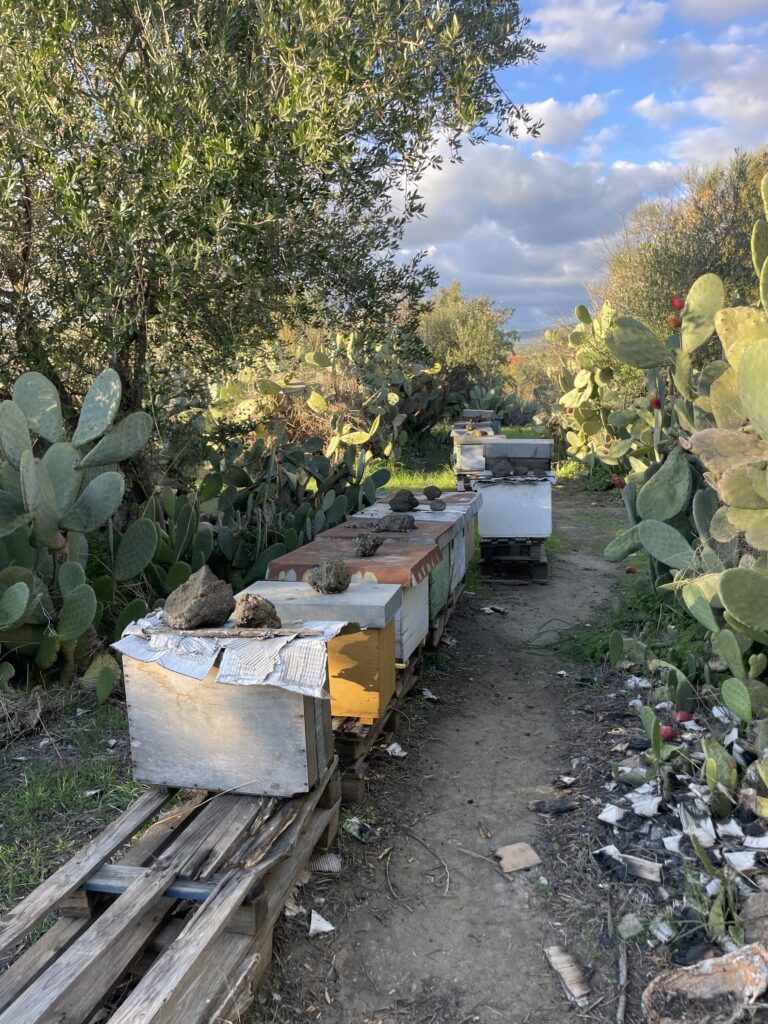
I assumed the prickly pears were Sicilian through and through. They turn up on ceramics, postcards, even painted on the walls of the bar in Castelmola, which I mentioned in last week’s post. They feel ancient, rooted in the landscape. Though my father once mentioned they grow in Algeria too, and that as a child he used to buy them from a man selling them roadside.
They’re originally from Mexico.
The Spanish brought them to Sicily in the 15th century, around the time of Columbus, and they took to the volcanic soil immediately. Sicily is now one of the world’s largest producers of prickly pears. The same plant sits on the Mexican flag. Two places with nothing obviously in common, sharing a cactus. Sicily does this a lot, absorbing whatever or whoever arrives on its shores, and folding it into its culture.
We kept walking, and then I noticed something moving in the distance, a small white shape shuffling between the brush. My father-in-law smiled and told me there were six more puppies on the farm. They’d been there the whole time, hiding in plain sight.
Later, cutting open prickly pears outside the barn, I heard movement under the counter. Looking closer, next to the tractor, all six puppies were tumbling over each other, each one a different shade, each one enough to melt my heart.
I understand now why my father-in-law loves this place. It’s somewhere time stops mattering. Then, in the distance, I heard my partner call out, “Nadia, come see the gebbia”.
My father-in-law walked me over and showed me the gebbia, a stone water reservoir, old and solid, sitting on the edge of the farm. He built it himself, before my partner was born.
“Gebbia. That sounds Arabic”, I said.
“It is,” my partner confirmed.
I looked into it afterward. The word comes from jābiya [جابية], which literally means “water tank” in Arabic. I’d studied Arabic for my degree and spent childhood summers in Algeria, though honestly I’d never come across this word before. Here I was, standing in a Sicilian field, hearing a word that sounded familiar. My father-in-law had built something with an Arabic name and never knew it. The knowledge had simply come down through the generations, buried in the language of the land.
The Arabs ruled Sicily for over two centuries, from the ninth to the eleventh. They brought more than language: water systems, farming techniques, crops. The gebbia is Arab engineering. They brought the island the finest flavours too, citrus, sugarcane, aubergines, pistachio. This farm is, in its own small way, an archive of a civilization that officially ended a thousand years ago.
Nothing here is only one thing.
Walking back to the car, I asked my father-in-law whether the farm has changed much over the years. “The land is the same,” he said. “Maybe the structures are a little better now. But the land doesn’t change”.
Here’s something I keep coming back to about slow living. The people who actually live that way rarely call it that. They don’t optimise their morning or follow some rigid checklist. They just do what needs doing, at whatever pace the thing itself demands. You can’t rush a beehive. You can’t hurry a clementine along. The gebbia fills at whatever rate the land allows. My father-in-law understands this without ever needing it explained to him.
I came to Sicily and felt at home before I understood why.
Others leave Sicily in search of new experiences and opportunities. Next week, I’ll be interviewing a Sicilian woman who left the island in her early twenties and what happened when she returned.
Alla prossima,
Nadia