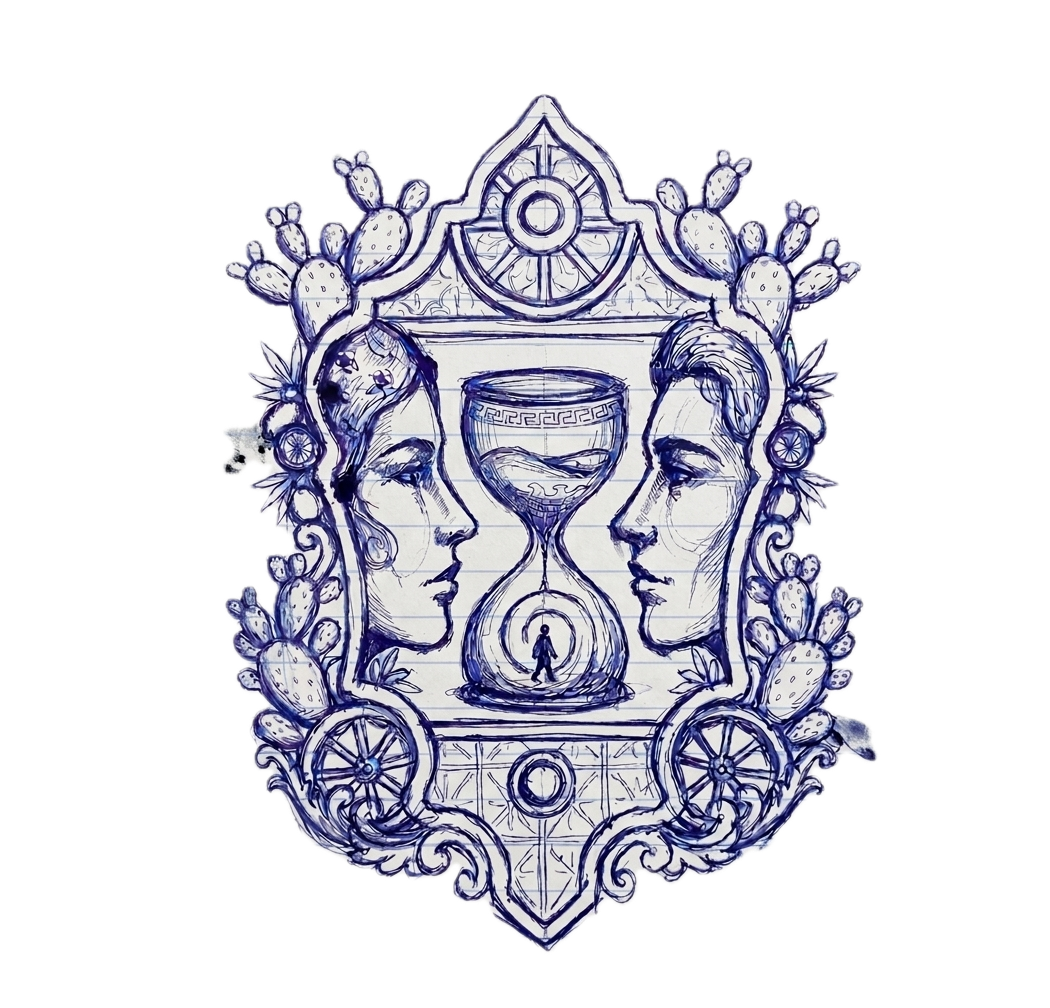

Four Strangers
There are things you carry quietly before you find the right words.
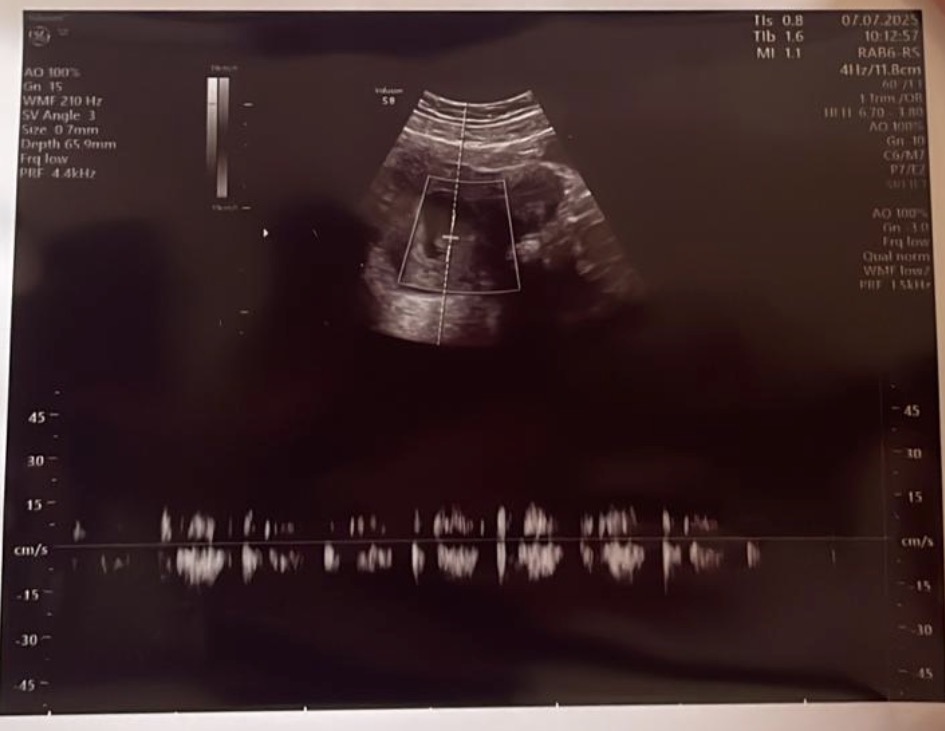
In the spring of last year, my partner and I found out that we were expecting our first baby. I’d only just arrived in Sicily, and life already felt like it was moving at the speed of light. New country, new home, and now this. Still, we were so happy and both decided to just enjoy the ride rather than worry too much.
Fourteen weeks in, we got the worst news imaginable. The condition was severe, a rare abdominal wall defect in which organs develop outside the body. Multiple doctors confirmed there was no version of this story with a different ending. We wanted this baby so badly, and I want to say it clearly, because I think people sometimes assume they know why a couple might terminate a pregnancy.
We had a week to wait between the diagnosis and the procedure. Seven days. That’s its own kind of slow, aching feeling. I went about my life during that week, work, conversations, the usual motions, while carrying something nobody around me could see. There’s a particular cruelty in that kind of waiting, when my baby’s life was no longer in my hands. That week, we said goodbye to our strawberry-sized miracle.
When the day finally came, my partner and my mother came with me to the hospital. I was so grateful to have them there. But at a certain point I was separated from them. They weren’t allowed into the area where I’d wait before the procedure, so I watched them stay behind and walked on alone.
The waiting room held four of us. Four women, four strangers, brought together by something enormous and unspoken. I don’t know their stories. I could only go by what I saw.
One woman was calm, composed, and knew what to expect. The second, a girl, had her boyfriend with her, who was waiting outside where my partner and mum were. The girl sat quietly, holding back tears. The third was very young, no older than sixteen, with her parents who accompanied her to the hospital.
One woman was calm, composed, with the ease of someone who knew what to expect, who’d perhaps been here before. I’d seen her arrive at the hospital reception earlier without a care in the world, or so it seemed. The second, a girl, had her boyfriend with her, waiting outside where my partner and mum were. He wore the expression of someone trying to hold something together. The girl sat quietly, not crying, but clearly holding back the tears. The third was very young, no older than sixteen with her parents who accompanied her to the hospital.
We didn’t talk much. Mostly we sat in silence, or slept. At one point I caught a bit of what they were saying to each other in Italian: she’s not from here, she doesn’t understand. I was the foreign girl.
My Italian was limited then. My partner wasn’t with me, so when I tried to ask the nurse about the medication, timing and dosage, I relied on the few words I knew and a lot of hand gestures. I wasn’t sure I’d gotten it right. I just hoped.
An hour before the procedure, we had to change into bright blue scrubs, and I fumbled with the hospital gown until I copied one of the other girls. Then, after what felt like forever, the nurse called all four of us together. It was time. We walked down the corridor in our scrubs, shoe covers over bare feet, hair shoved under caps, single file, shuffling in silence. I remember thinking I felt like a naughty schoolgirl summoned to the headteacher’s office. I was thirty-two years old. I’d done nothing wrong.
The anaesthetic room had four beds. We each took one. One by one, the nurse came with the anaesthesia, and one by one, we went under, wheeled through the operating doors, only to return twenty minutes later, waking slowly, still half-sedated. Each of us came back different. One went in like it was nothing and came out smiling, cracking jokes. One had gone under crying and came back quiet, sad, without drama. The youngest kept asking questions beforehand, clearly nervous, and afterwards we all turned toward her in silence, as if her youth had been handed back.
I went last. The pre-meds needed extra time to take effect, given how far along I was. I lay there watching the others, scared, not of the procedure itself but of what I might say once I went under, what I might reveal. Then I remembered, no one here understands English anyway.
Still, it didn’t really matter. None of it did.
Just as the anaesthesia took hold, my partner’s uncle, our gynecologist, came into the room. He held my hand with one hand and my head with the other, and I fell into a deep sleep where I could finally be with my baby, to say goodbye.
Then it was over.
I want to say something about why I am writing this. Not every termination is a choice made lightly, or a choice at all, not when the alternative is unthinkable. There are as many reasons as there are women sitting in those waiting rooms. Most reasons are nobody’s business, and all of them deserve compassion.
I also want to say something about the other women. We shared one of the most intense experiences of our lives together. We sat in the same room, walked the same corridor, and lay on adjacent beds. We went under and came back. Then we went our separate ways, back to our separate lives and I’ll likely never see any of them again. I don’t know if they think about that day. I often do.
I have thought about writing this down for a long time. It’s a little different to my usual posts, but just as important. This is one of my personal experiences in Sicily. Maybe one day it will find its way into something bigger, a book perhaps, the kind that takes years before you understand what you need to say. For now, this is enough: this post, these words, these four strangers.
For me, writing it down is part of setting it free.
Alla prossima,
Nadia