
Eight Euros for a Coffee…or a “Blow Job”…Shot
Beyond the luxurious Taormina, ten minutes up the hill, there's a bar covered in phalluses. And the view is stunning.
Last week I wrote about a night at the Taormina Film Festival. This week, one of the perks of working remotely, my partner and I decided to spend the day working from Taormina instead.
On a break, we walked past the Dolce & Gabbana bar and stopped to read the menu posted outside. A coffee, a simple espresso, the kind that costs about €1 almost anywhere else in Sicily, was €8 there. We looked at each other, didn’t say anything, and kept walking.
It’s not really about the coffee. It’s about what the coffee tells you.
Taormina has changed, and fast. Hotel rates in town now average over €1,200 a night in 2025, up more than 80% since 2018. And people still come, no matter the price, because the people who can afford that price aren’t put off by it.
A lot of this traces back to one TV show. White Lotus filmed its second season at the San Domenico Palace, and the effect was almost immediate. From what I’ve read, Americans searching “Taormina” rose by 180% and tourist arrivals jumped 75% the following year. Then came the dedicated White Lotus tours, which gave me flashbacks to Dubrovnik in 2019, overrun with Game of Thrones tourists and souvenir shops selling Iron Throne mugs. People now travel here specifically because they saw it on telly.
I keep thinking about a friend of mine, someone I introduced to my partner not long after we met, before I’d ever set foot in Sicily myself. She’d been to Sicily twice. When my partner asked where, she said Taormina. He asked, naturally, if she’d visited anywhere else while she was there, Catania, Siracusa, Etna, all an easy day trip away. No. Both times, a full week, and she never left the town.
To be fair, it’s a beautiful town. But it doesn’t take more than a couple of days to see everything in it, and there’s an entire island just beyond it, places even more picturesque, some less than a thirty minute drive away. It must have cost a fortune, eating and sleeping there for a week, twice. But who am I to judge? There’s something magical about driving along that winding road and looking out at the sea, like something out of a film. It is aesthetically perfect, and if I were an aspiring influencer, I’d absolutely snap a photo of an €8 coffee with the Dolce & Gabbana sign behind it, or a fancy granita at the famous Bam bar.
Between her two visits, a year apart, my friend mentioned how much busier the town has become since the show aired.
None of this is new, though.
Two centuries before White Lotus, people were already finding their way here. The Grand Tour brought the first wave in the 1800s, wealthy Europeans chasing beauty and inspiration. Oscar Wilde came. So did D.H. Lawrence, who ended up staying for two years. White Lotus didn’t create this influx, it just gave it a hashtag. It reminds me a little of Capri now, all the glitz and glam. I just hope Taormina hasn’t lost whatever made it special.
I asked my partner what he made of all the recent changes, the new boutiques, the increasing tourism, and the foreign investment. He paused before answering, which told me something on its own.
“It brings jobs,” he said. “People are working who weren’t before. Unemployment’s a real problem in Sicily and foreign investment brings opportunities. To break away from the old way of thinking. At least the Dolce & Gabbana cafe is owned by Sicilians”. Then he shrugged. “But it’s not really Taormina anymore. Not the one I grew up visiting with my parents”.
I suppose I could say the same for Hackney Central. Two opposing things can be true at once.
My mother-in-law had a different point of view, proclaiming, “A Sicilia casa nostra è”.
Ten minutes up the hill is Castelmola, a small medieval village most tourists never bother with. The road is narrow and winding, and the view ,when you arrive, is even better than Taormina’s. The place feels untouched.
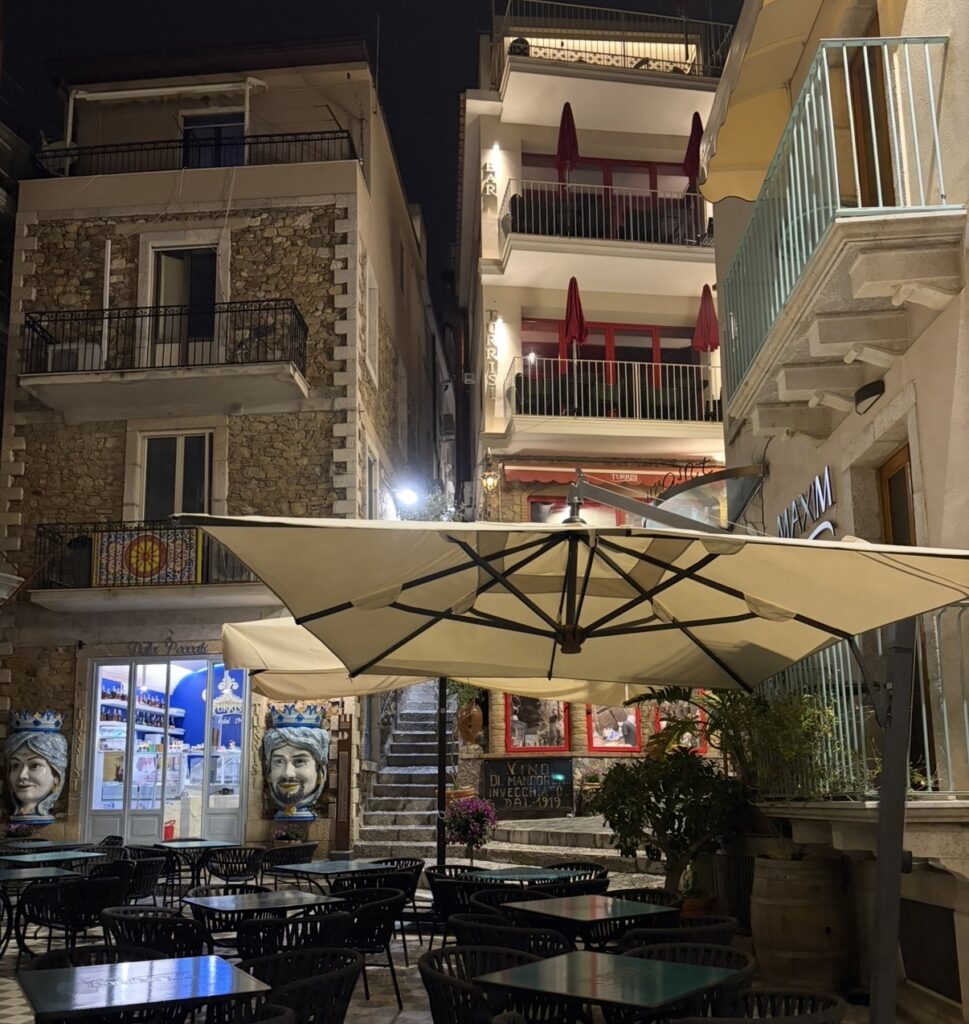
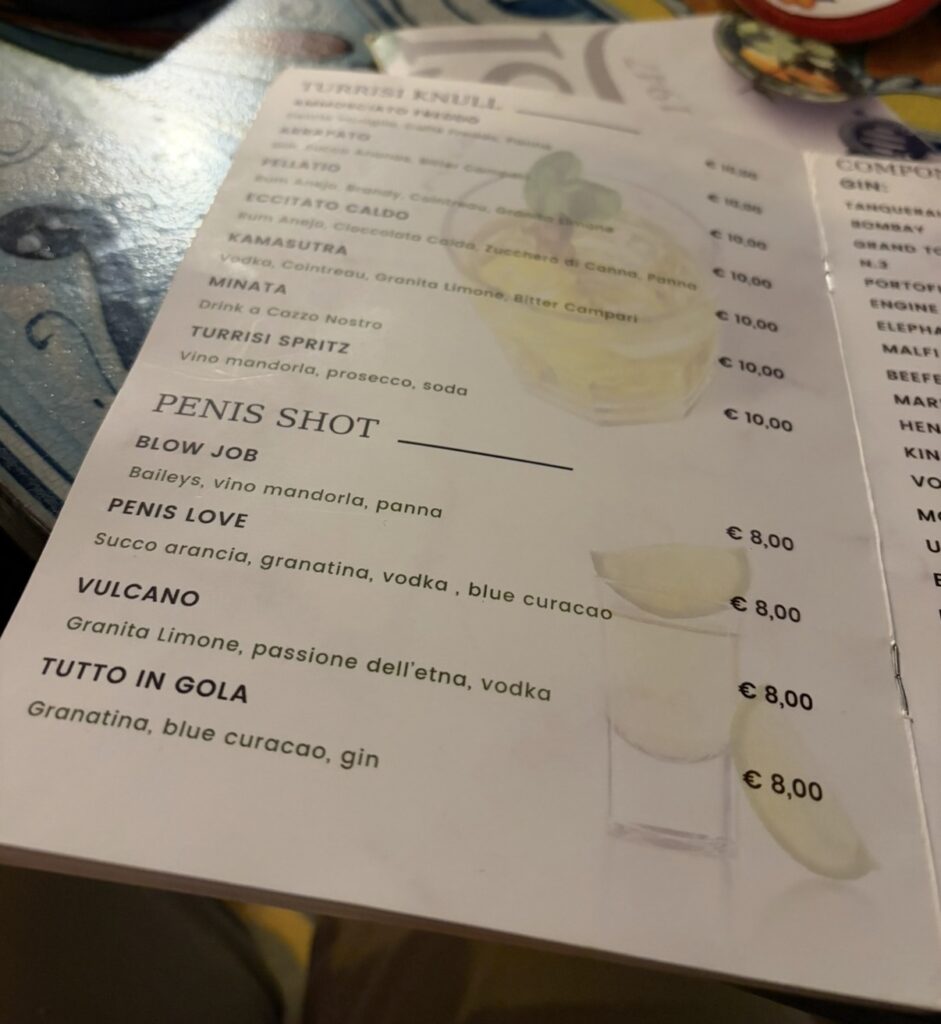
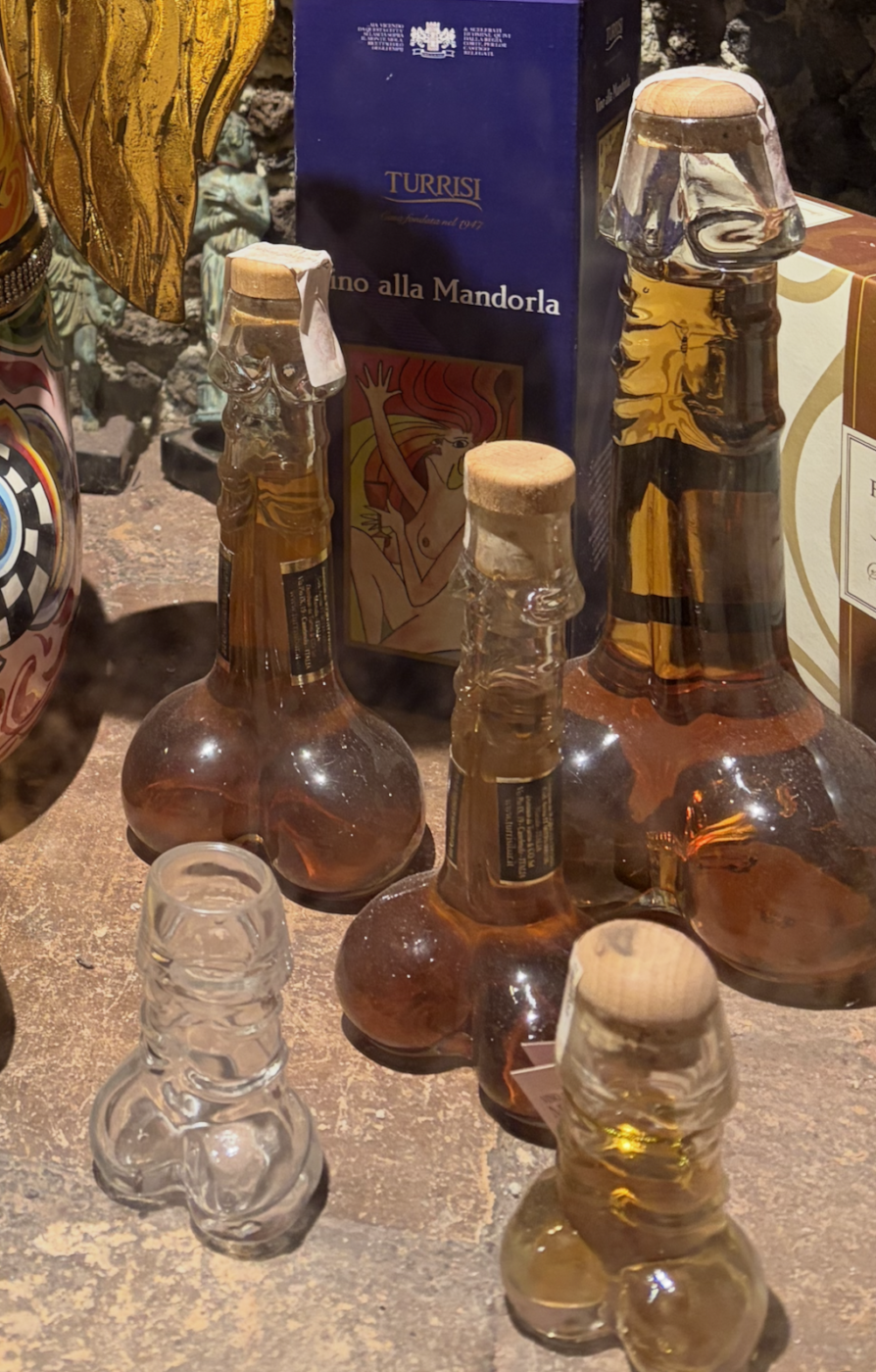
In the main piazza is Bar Turrisi, a quirky bar covered, quite literally, in phalluses. Wherever you look, there’s a penis-shaped something:floor tiles, lampshades, wall paintings of prickly pear cacti sprouting phalluses like flowers, a menu in the same shape, and, at the top of the staircase, a giant golden winged penis with a bell hanging off it. The drinks menu keeps the theme going: “Blow Job”, “Penis Love”, “Vulcano”, “Tutto in Gola”. It’s truly remarkable. I prudently went for sparkling water.
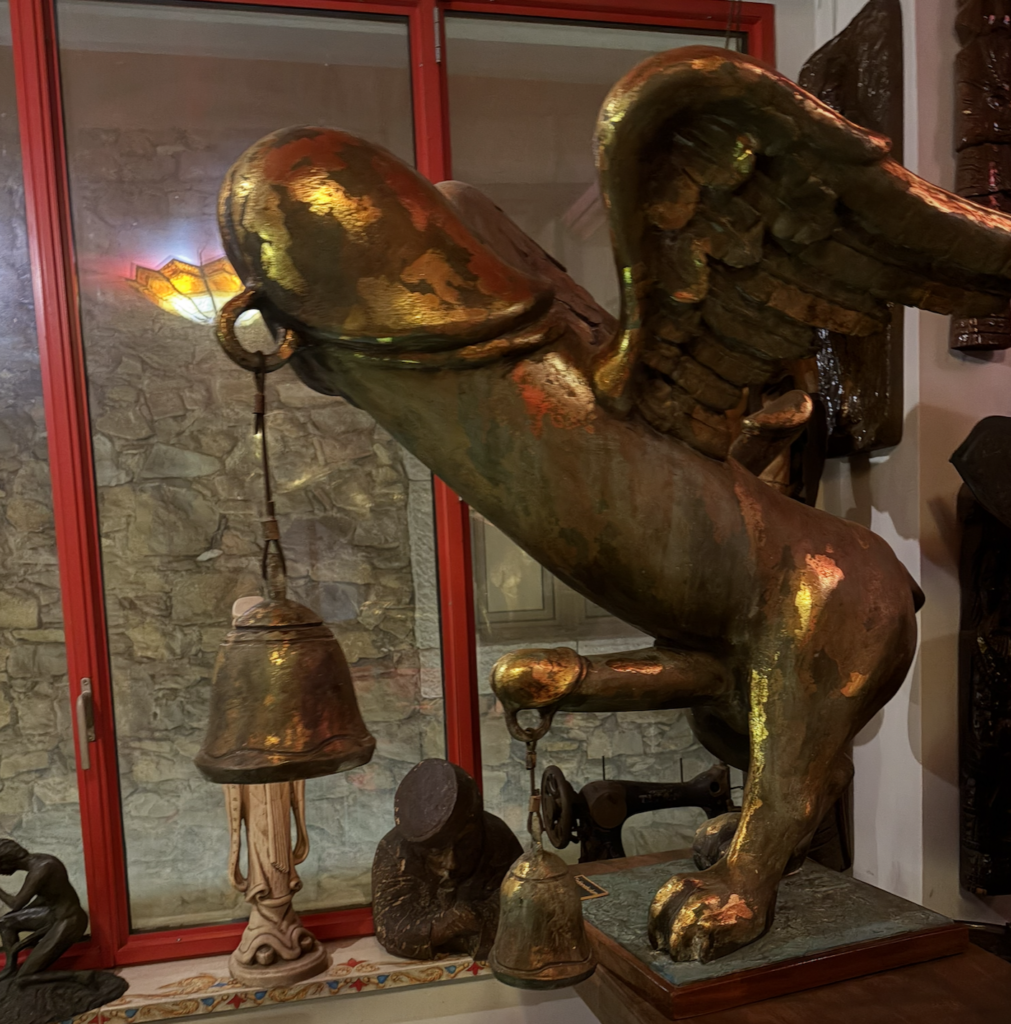
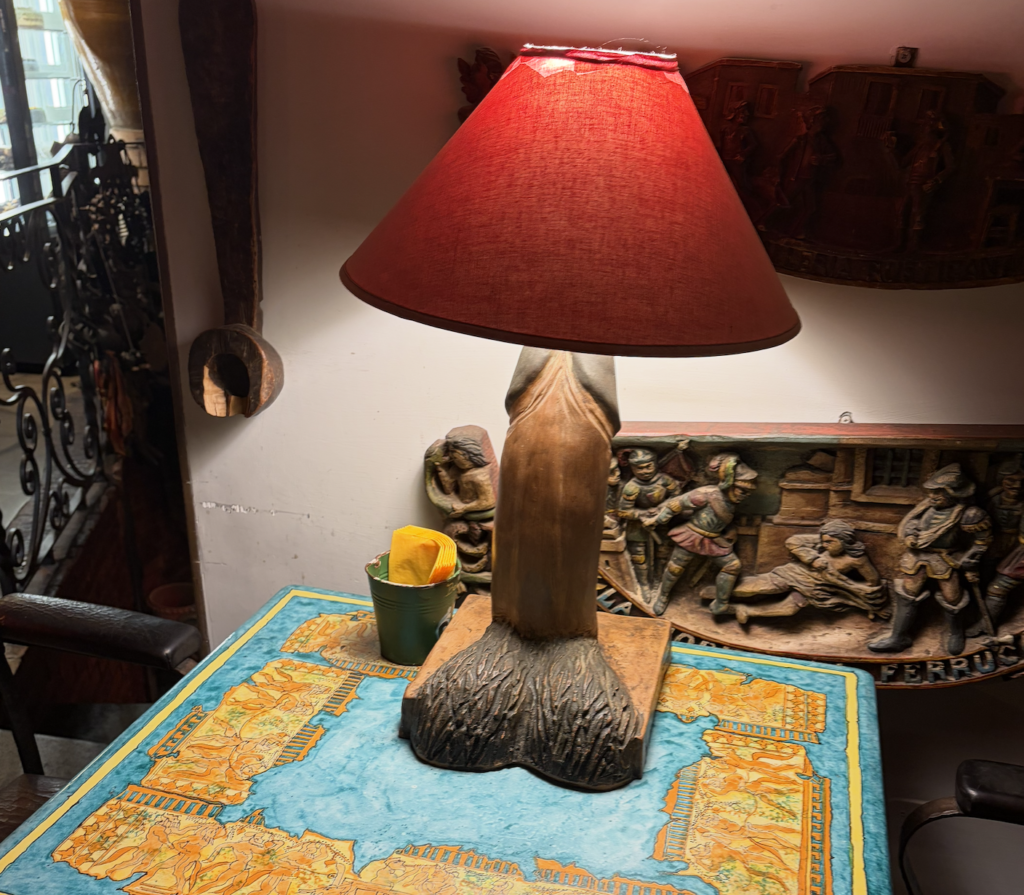
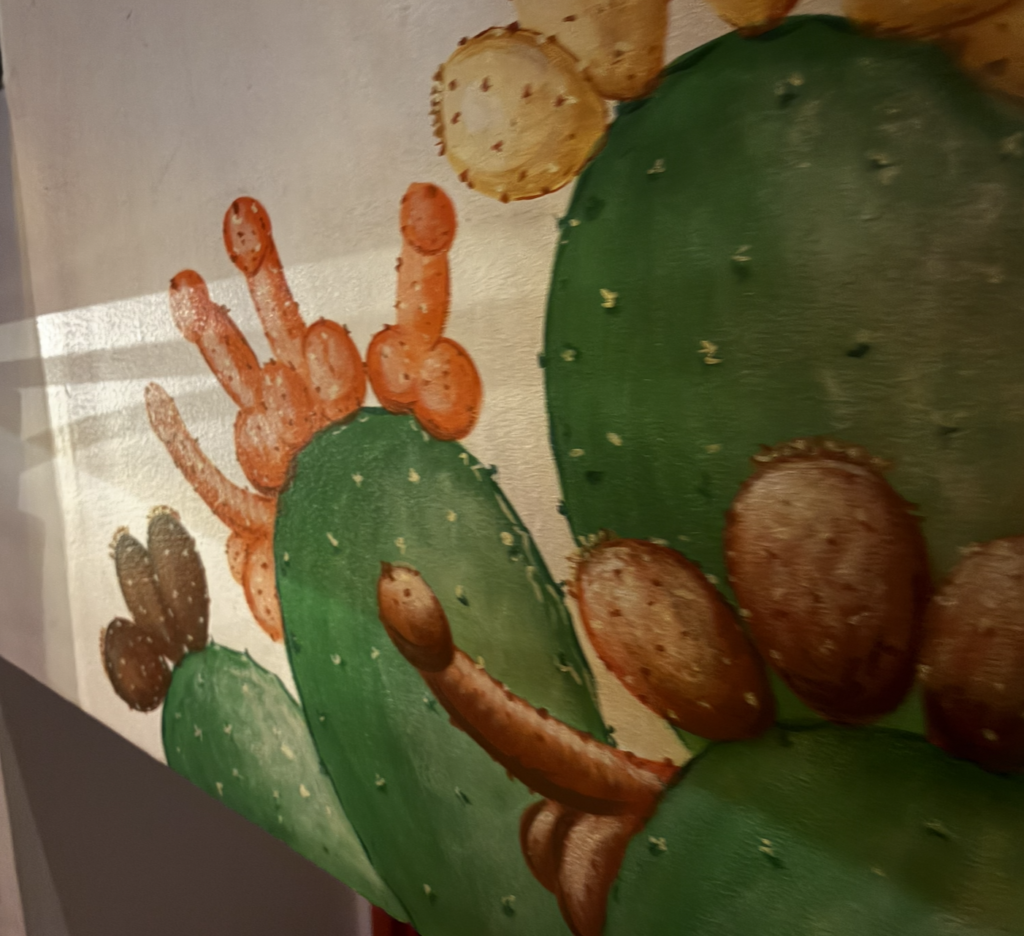
Bar Turrisi was founded by Salvatore Turrisi, a man with two loves, women and Greek mythology, who built the bar around the cult of Priapus, the Greek god of fertility.There’s real history behind the novelty. The phallus was traditionally seen as protection against the evil eye across the Mediterranean. And the evil eye culture is still very much a thing here, just like in North Africa. But that’s a story for another week.
Turrisi sits directly across from a church, which feels almost too on the nose. Sitting on the balcony looking over at it, you could really feel the village’s medieval bones. Castelmola is recognised as one of the most beautiful villages in Italy, the kind of place that risks being forgotten because it sits just outside the main attractions. Nobody’s filming a TV show here. There’s no €8 coffee, though a “Blow Job” shot here will cost you the same.
I don’t know what Taormina will look like in five years, or Sicily for that matter. For now, at least, the hidden gems are still out there, tucked just out of sight.
Alla prossima,
Nadia