Pasta Alla Norma, a Dish Worthy of an Opera
Sunday lunch at my mother-in-law's, a four-ingredient pasta, and the opera that gave it its name.
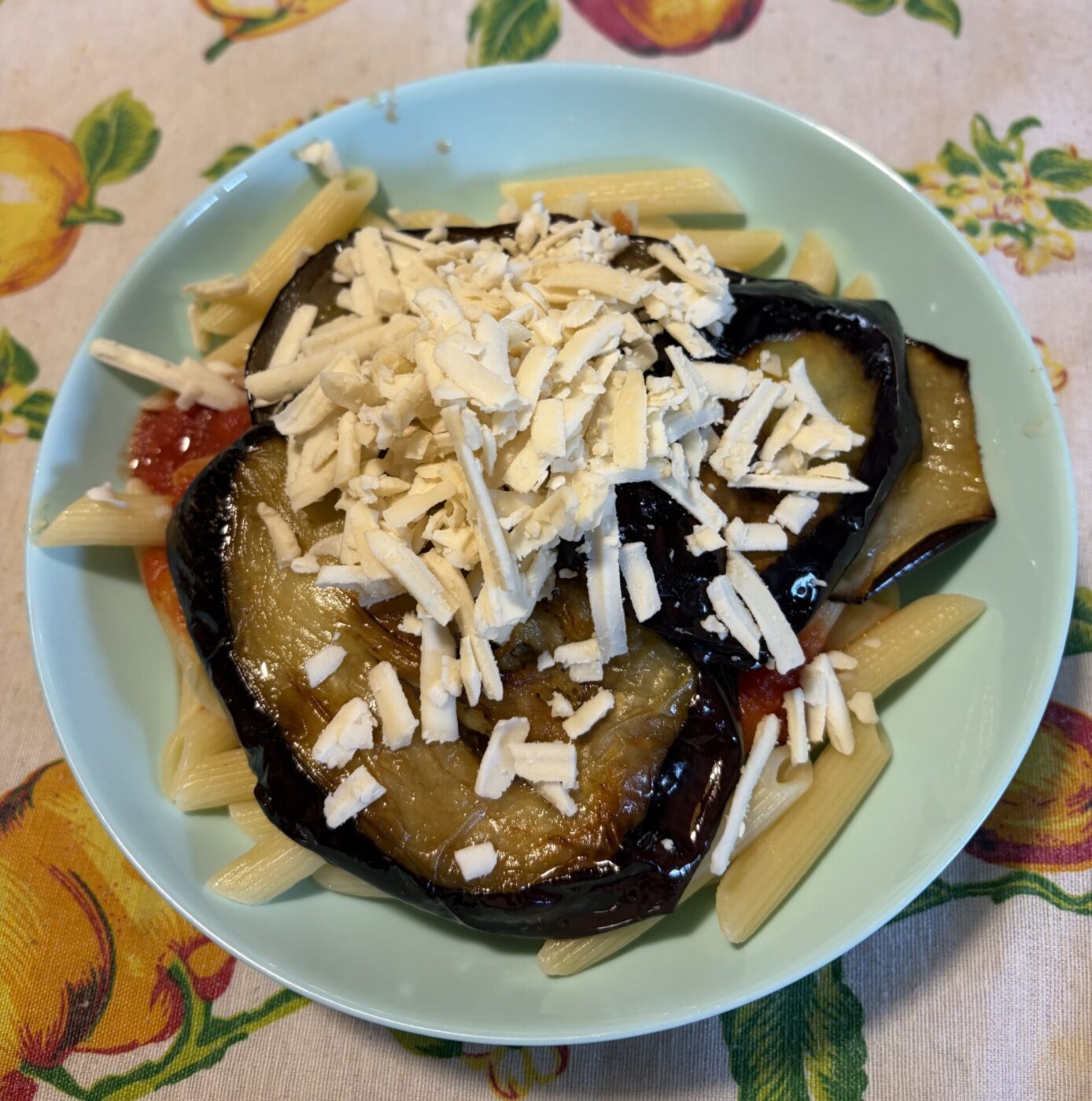
Whenever I’m back in Sicily, every Sunday we go to my mother-in-law’s house for lunch. It’s a tradition. No matter what happened that week, Sunday means showing up by half past one to sit together and eat far more food than four people could reasonably get through. Winter usually means Ragù pasta and summer means Pasta Alla Norma.
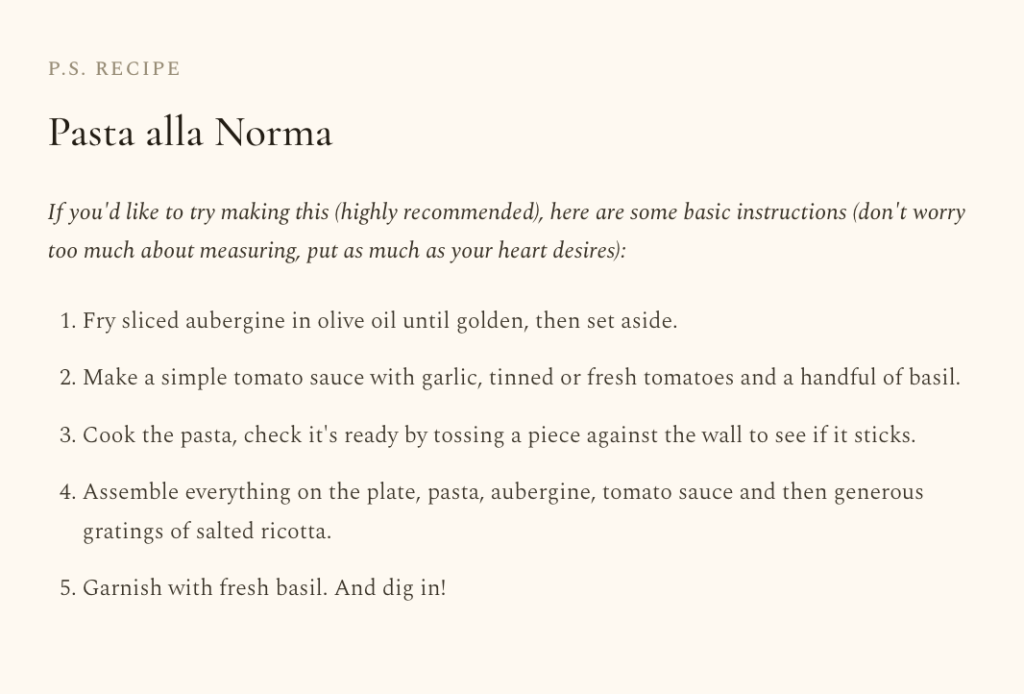
Norma has become one of my favourite dishes since moving to Sicily. It’s a simple dish, made with fried aubergine, tomato sauce, a generous sprinkle of salted ricotta and topped with fresh basil garnish. That’s it. No complicated technique, no long list of ingredients, just a handful of things done well. Even Cali gets a little plate of sauce, which she licks clean.
Over some chitchat in my broken Italian, while I complimented my mother-in-law’s cooking, my partner turned to me and asked, “Do you know where the name Pasta alla Norma comes from?”
My mind went with the Normans, but I couldn’t have been more wrong, despite how it sounds.
My partner asked his parents the same thing.
“Certu ca u sacciu, è n’opera ri Bellini”, my mother-in-law replied in Sicilian.
She was referencing the opera Norma, composed by Catania’s own Vincenzo Bellini. It went on to become one of the great works of Italian opera, and Bellini became a household name across Sicily and worldwide.
The pasta dish itself, as far as anyone can tell, already existed by then, a Catanese staple of aubergine, tomato and ricotta. The name came later.
My partner explained that it apparently came from the poet and playwright, Nino Martoglio, who, upon tasting the dish, blurted out “Chista è ‘na vera Norma” (this is the true Norma), meaning it was as flawless as Bellini’s masterpiece. What Martoglio said was reported in the press, the word spread and the name stuck.
Funny enough, ask the younger generation of Sicilians today where the name comes from, and most wouldn’t know.
It’s just one of many dishes that make up Sicilian cuisine. The more time I spend here, the more I see that Sicilian cooking is actually quite simple. The quality comes from the ingredients, tomatoes that are full of flavour, aubergine picked by the farmer that morning, locally made ricotta, and basil picked from my mother-in-law’s garden. Nothing is rushed. The food speaks for itself.
It made me think differently about food in general, and about eating more intentionally.
In London, walk into any supermarket in February and you’ll find strawberries, tomatoes, bananas, avocados that taste of nothing, all flown in from Spain or Brazil. Convenient, but it also comes at a cost, both price-wise and health-wise. Produce that travels that far is often picked before it ripens and starts losing nutrients the moment it’s harvested, so by the time it reaches the shelves of London, it has fewer vitamins and less flavour than it should have.
Here, eating seasonally isn’t a lifestyle choice, it’s just how things are. Tomatoes and aubergine in summer because that is when they are ready to be picked and eaten pronto.
Before moving here, meals were often rushed between meetings, lunch eaten at a desk, dinner reheated. Here, meals are made from scratch, and because they’re usually simple, it takes no time at all. Putting a premade lasagna in the microwave or oven takes just as long. And it’s enjoyable, almost therapeutic.
Cooking and food are a big part of the tradition and culture here in Sicily. Sunday lunch isn’t just a meal and Norma isn’t just pasta. It’s a time to connect and learn new things.
Conversation never stays in one place for too long. We’d gone from Pasta alla Norma to its history to Sicilian food to English food and somehow within the same few minutes, we landed on Putin. I’m not entirely sure how. My mother-in-law has a gift for this, steering the conversation from aubergines to geopolitics without anyone noticing. But I wouldn’t have it any other way.
Next week I’ll share my experience at the Taormina Film Festival, Russell Crowe’s appearance, and watching his latest film at the incredible Ancient Greek Theatre.
Alla prossima,
Nadia