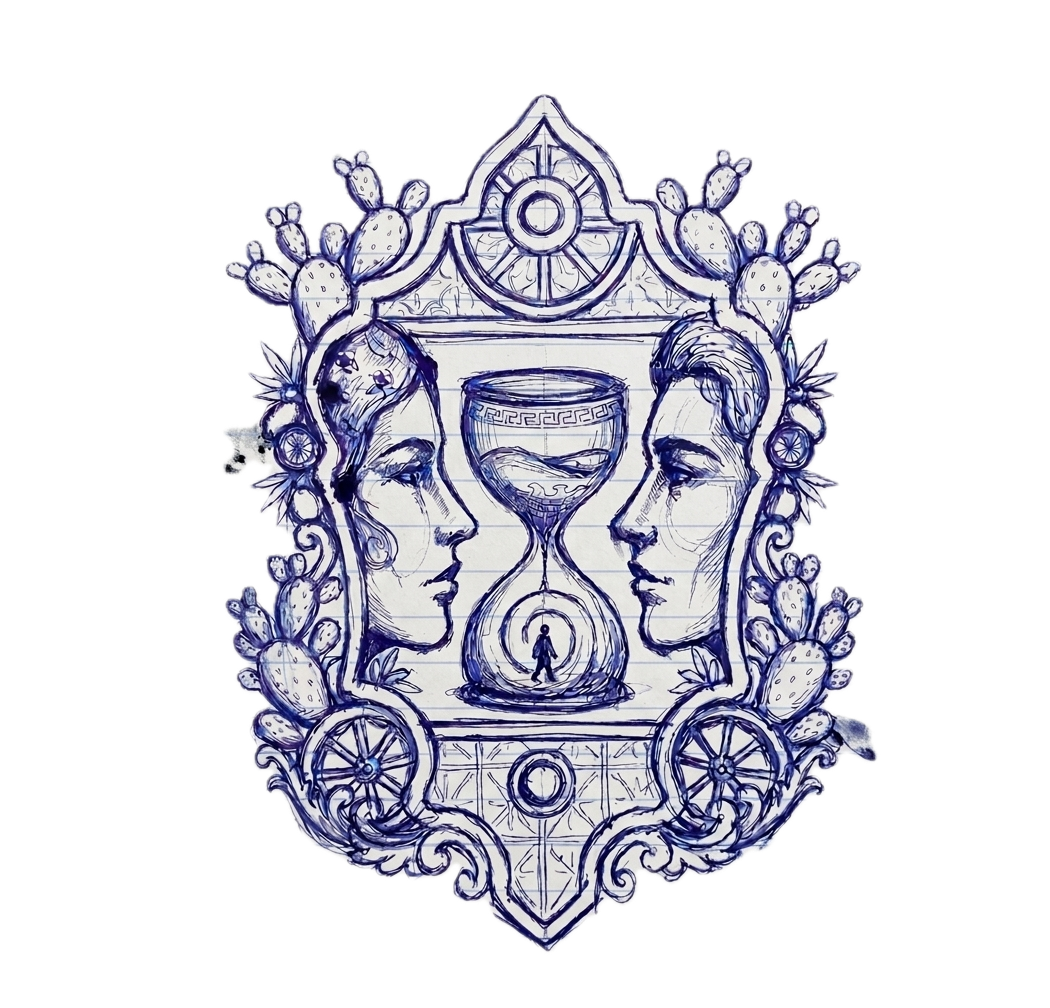

Colapesce, Sicily’s Original Aquaman
My partner came home with three fish. Then he told me about the man who swam to the bottom of the sea and never came back up.
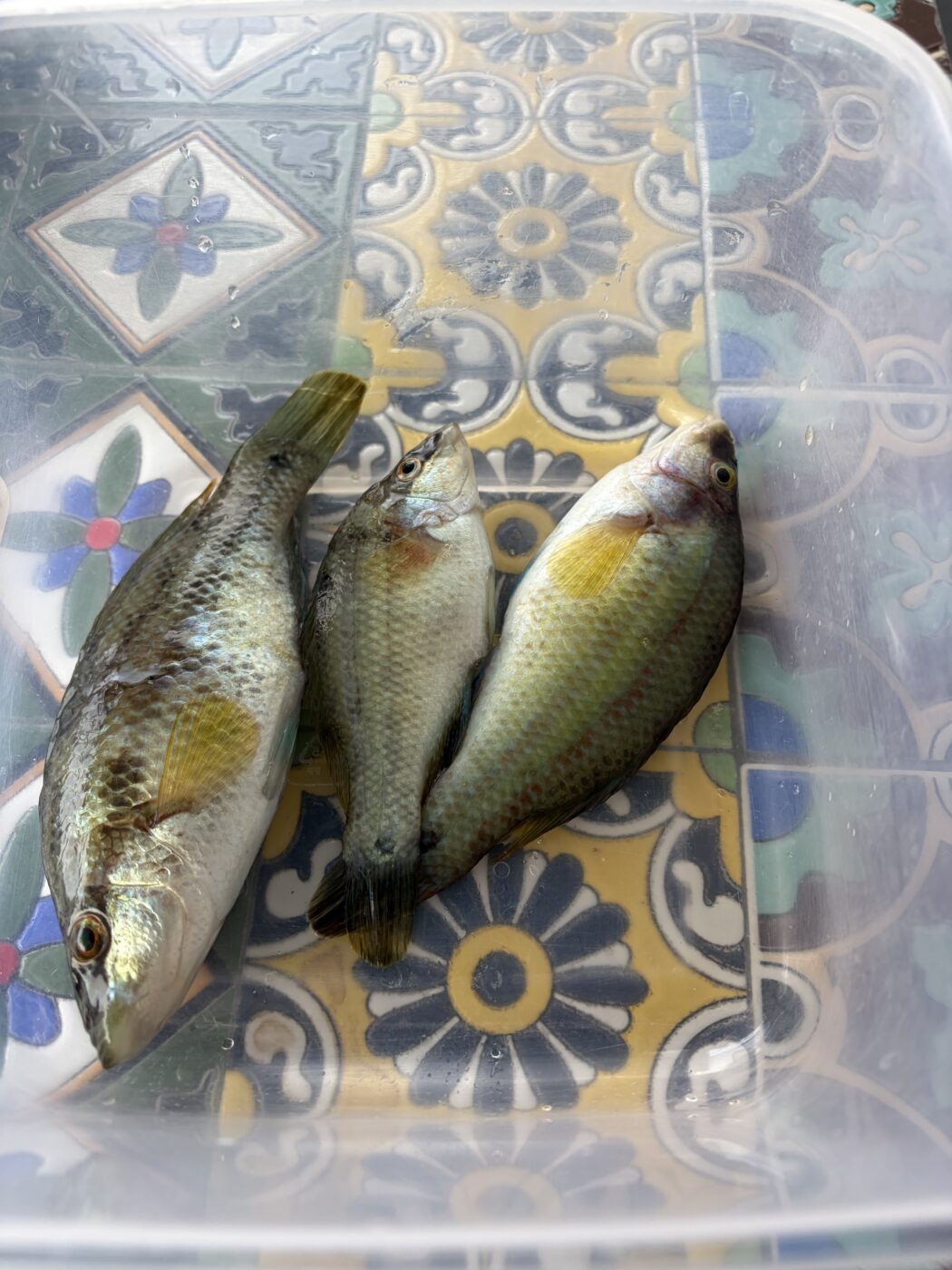
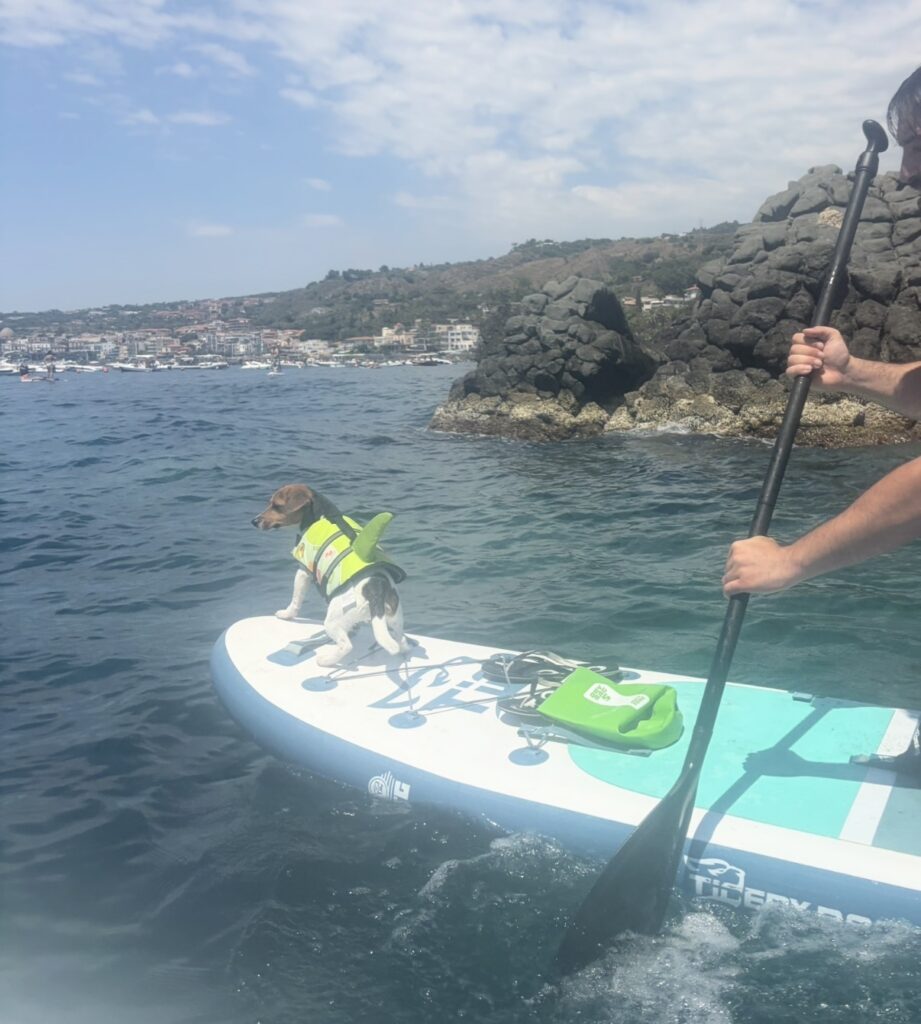
I got home from the morning walk with Cali as my partner was coming back from his swim, his first time out with all of his new equipment he’d been dying to use for days. He came back successful, catching three small, but substantial, fish, caught from a little hidden spot the boats couldn’t reach. My first thought, slightly concerned, was whether these particular fish might be hallucinogenic if you ate them, which would not have been a fun trip for any one, Gino included. My partner reassured me that these types of fish aren’t easy to come by in a fishmonger’s.
Cali parked herself at the table, tail waggling. I couldn’t tell if she was hoping for a taste of fresh fish or simply picking up on the excitement in our voices without knowing why. Either way, my partner was buzzing and honestly I was impressed. We didn’t waste any time pan-frying those bad boys, plating one up for Gino, our kitten, and another for Cali. Gino just sat there staring at his plate, then at us, then back at the fish, like he couldn’t quite believe his eyes. In the end, all three fish were eaten that day, by Gino.
This seems to be our new normal. Fishing turned into free diving, and what used to be the occasional swim has become hours spent out at sea. He tells me the best time is early in the morning, when the light’s low and the water’s calm. I’ve started calling him Aquaman, what with the way he holds his spear like a trident, and I think he quite likes the nickname.
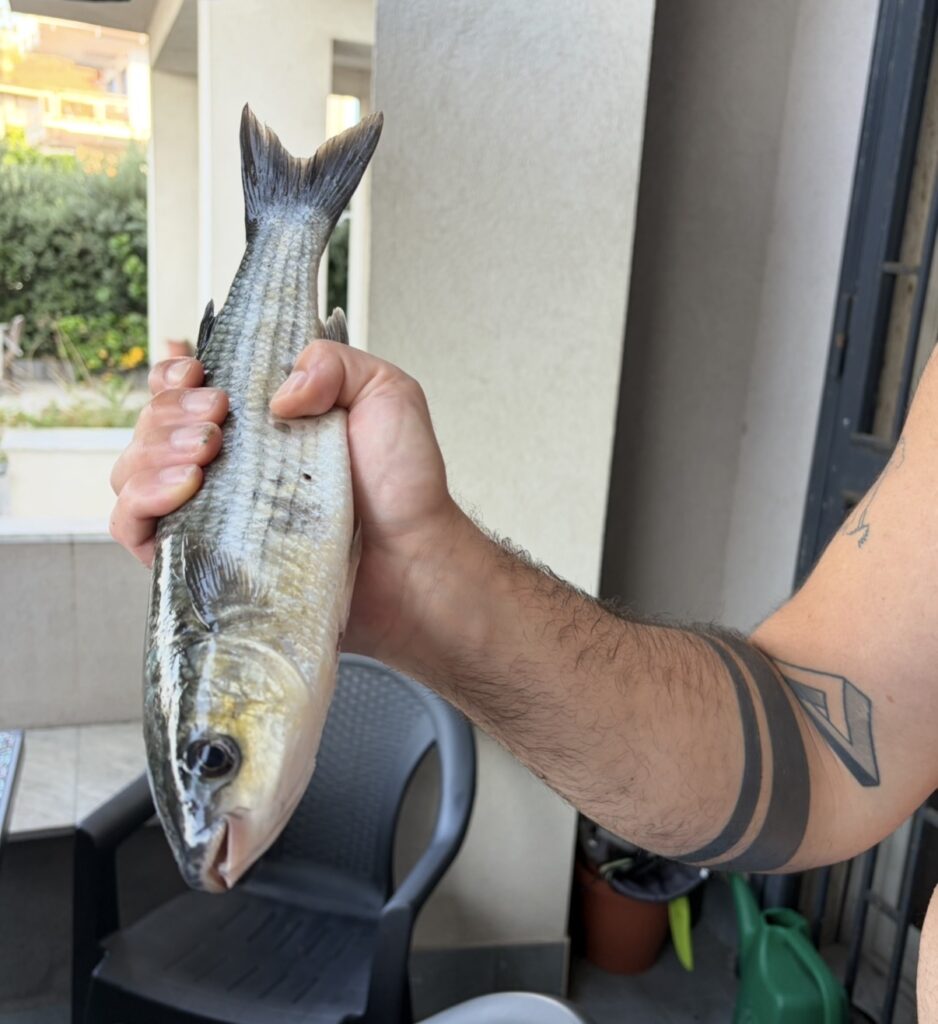
“You know there’s a story about a man who actually turned into a fish”, he said, while cleaning the catch.
OF COURSE THERE IS.
His name was Colapesce, “cola” short for Nicola and “pesce” meaning fish. As a boy he loved the sea so much, spent so much time in it, that he slowly became half fish, or so the legend goes. I’m imagining it less as scales and more as someone who could swim fast, dive deeper and hold his breath. Word of this reached the emperor, Federico II, a man who couldn’t leave any mystery unsolved.
So Federico put him to the test. He threw his gold ring into the sea and told Colapesce to bring it back, which he did. Federico threw it a second time, this time deeper and further out, and again Colapesce returned with the ring. Then Federico threw the ring a final time, further than either of the others, along with a new task. Find out what’s holding Sicily up.
Colapesce went down. This time, he didn’t come back up.
What he found, the story goes, were three mega columns holding the island in place. Two were solid, but the third was broken and crumbling away. It was at this moment Colapesce made the decision to stay down there holding the broken column with his bare hands, keeping Sicily from slipping into the sea.
People say he’s still down there now, keeping the island afloat.
Giving your whole life to a place is its own kind of love, the unconditional and selfless kind. Like Acis and Galatea, there is something bittersweet about the Colapesce story. Not many people would give their life for a person, let alone a place.
I held off on saying who Federico II di Svevia actually was, on purpose, because he deserved more than a passing mention. The man held many titles. Holy Roman Emperor, King of Sicily, Stupor Mundi (wonder of the world). Norman by blood, yet he fell completely and utterly in love with Sicily. So much so that when he died in 1250, he asked to be buried here, rather than Jerusalem or Germany, where he was king. We actually visited his tomb in Palermo Cathedral a few months back before I even heard of Colapesce.
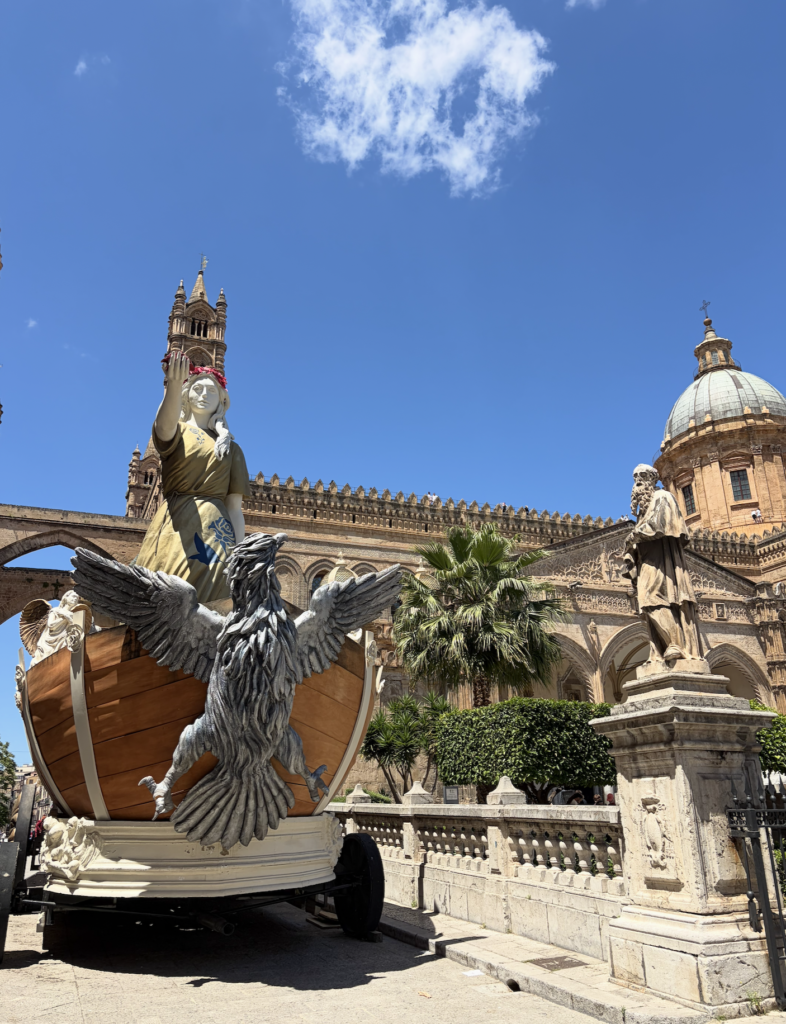
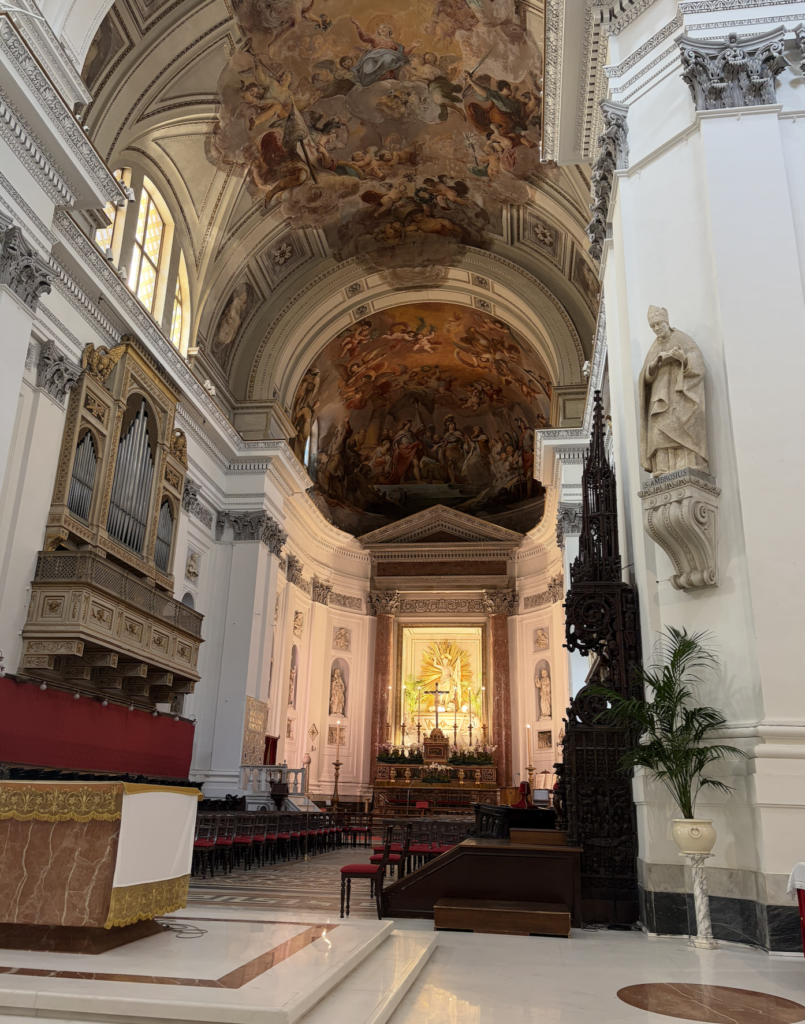
Federico’s family, the Hohenstaufens, came after the Normans, who’d ruled Sicily for over a century before him. The Normans built the castles and cathedrals, blending Arab, Byzantine and Norman styles into something you won’t see anywhere else. The Norman castle in Aci Castello I mentioned last week, for instance, predates Federico by a long stretch. He left it standing rather than tearing it down, and it just became another layer of Sicily’s history.
Sicily, throughout history, has been conquered by many empires and dynasties, yet the Sicilian people have been welcoming and in fact they have largely been able to retain their identity and autonomy throughout it all. I’m not Sicilian myself, but I feel at home here. I can understand why Federico was so fascinated with this island and why Colapesce gave his life for it.
Ever since I learned of Colapesce, he comes to mind often when I go for my lunchtime swim, and I think I understand a bit of why he chose to stay in the sea. There’s a weightlessness to it, a kind of calm. I take my snorkel down to the beach, watch the fish for a while, then just float face down, the light shifting through the water above me. Everything feels lighter, down there. The sea doesn’t ask anything of you , it just holds you, if you let it. Afterwards I sit on the rocks for a bit with my book, Stephen King’s On Writing, at the moment, before heading back to my laptop for the afternoon, where I will sit staring out the window, wishing I were back in the water. Partly because it’s much nicer than looking at a kanban board, but also, if I’m honest, because it’s too hot and I refuse to turn on the AC.
I still don’t know what next week’s post will be about. I have no doubt it will be inspired by another ordinary conversation or something that catches my eye.
Alla prossima,
Nadia