

Cu Nesci, Arrinesci
A conversation about leaving, returning, and the litter in between.
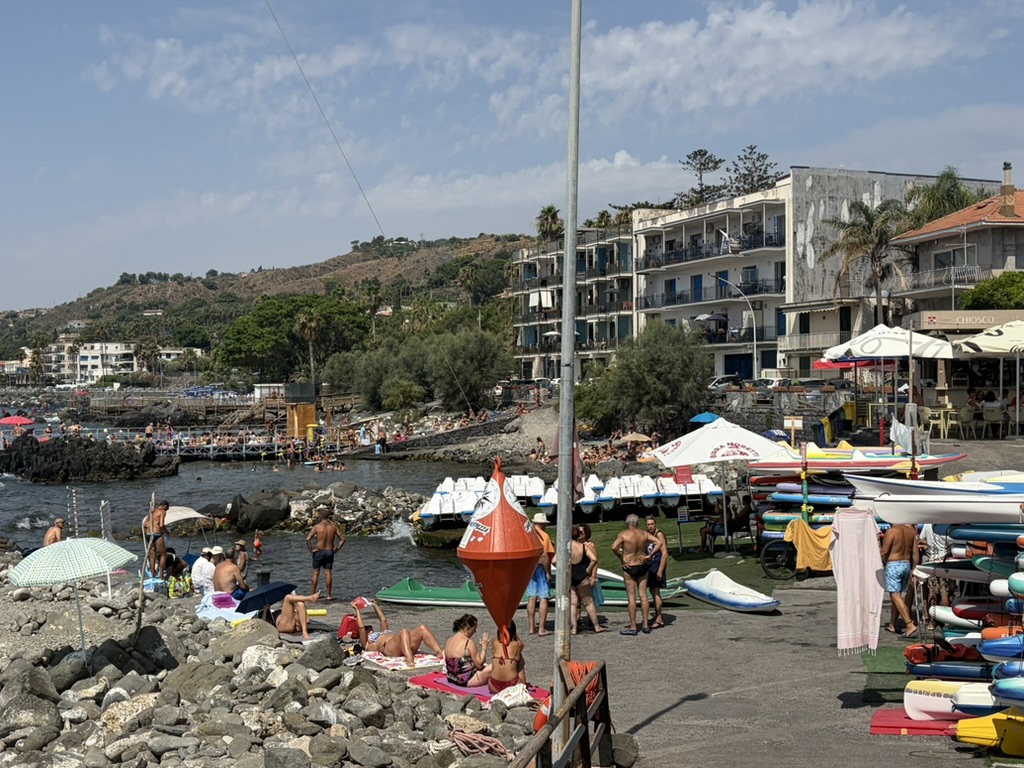
Summers in Sicily hit differently. My northern European side comes out in full force this time of year, and I avoid the peak sun like the plague. I look out of the window at the sunbathers and think of chickens roasting in an oven. My regular lunchtime swim goes on pause for July and August, the beach too crowded, the humidity too much. September is my favourite month, when the heat finally breaks and the sea still holds the warmth of summer.
This is also the season when Sicilians in the diaspora come home, filling up on mortadella and mozzarella panini, under the African sun. Sounds delicious, doesn’t it?
Which makes you wonder why anyone would want to leave such a beautiful, interesting island in the first place.
There is a Sicilian proverb: cu nesci, arrinesci. Those who leave, succeed. Parents and grandparents have said it for generations to children heading off to work or study elsewhere. At its heart, it’s about stepping outside your comfort zone, and it’s stuck around in the language because, for many families, it’s turned out to be true.
Young Sicilians have been leaving for decades now, heading to Milan or further still, to London, Paris, Dubai. The numbers are hard to ignore. Sicily has lost over 280,000 residents in the last twenty years, roughly the entire population of Catania. Most of them are young and educated, and most won’t come back. The island is ageing. The towns are going quiet.
I remember one weekend my mum and I binge watched Amanda Holden and Alan Carr’s Italian Job, where they buy up rundown apartments for one euro in Sicily, trying to bring back tourism to these near ghost towns. The sad irony is that projects like this tend to be led by foreign investors rather than Sicilians themselves. And when you actually ask the people who left why they did, the reasons tend to rhyme.
My first assumption was the obvious one: better work, better pay. The usual story of people leaving home in search of adventure or a different life. Plenty of Brits do the same, relocating to Spain or Australia to chase a year-round tan and escape the grind of London (myself included). But after talking to someone who actually left Sicily, I realised there was more going on than that.
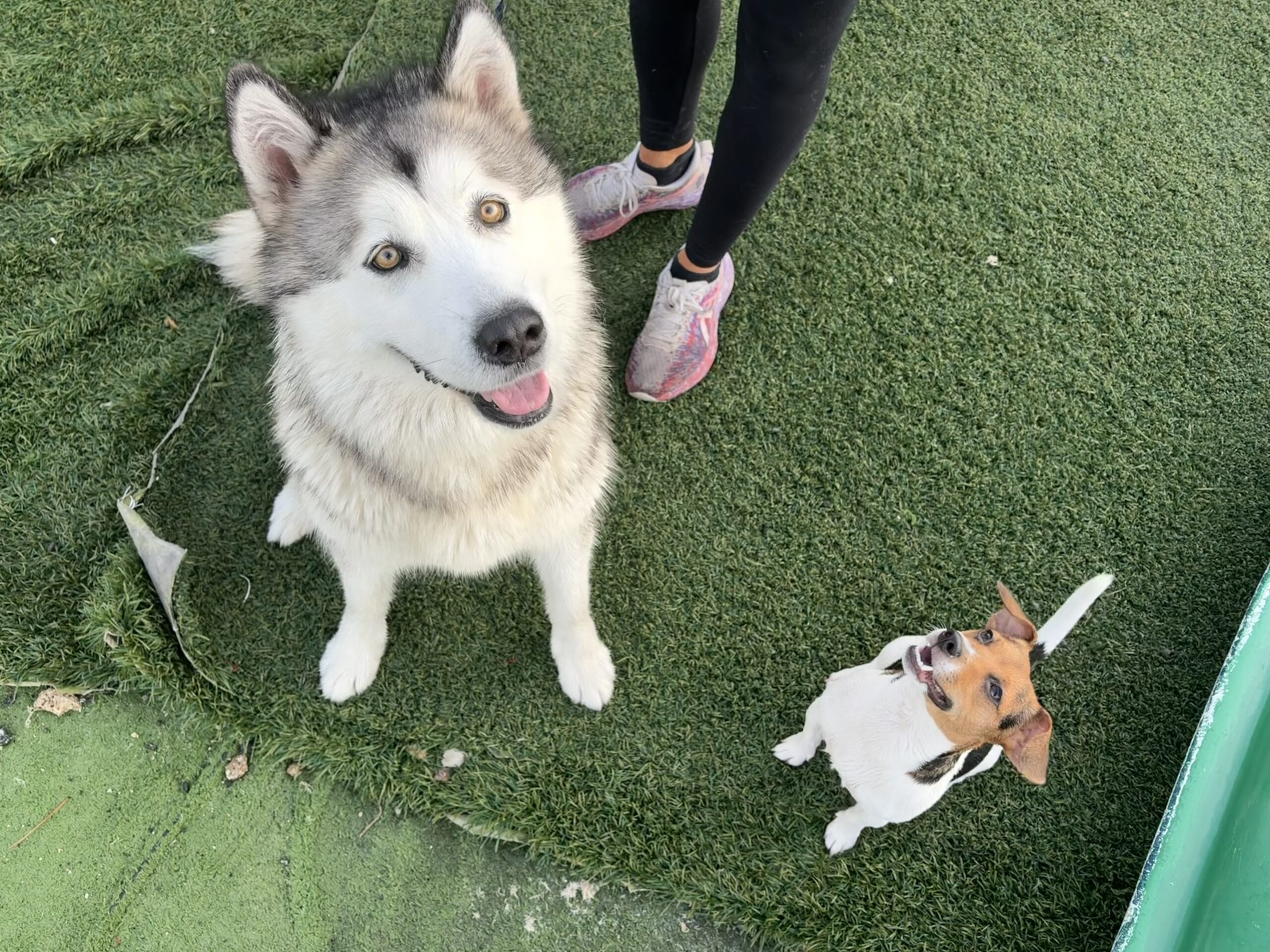
I spoke to a friend in her mid-thirties who has made the trip more than once. We met around a year ago on a dog walk, , her Alaskan Malamute Kayla is now practically inseparable from my Cali. She first left at twenty-one, came home, left again for Dubai, came home again.
“I always had the feeling it was not enough”, she told me, “People were not really able to see me or understand me. I was looking for something else”. That something else, for her and for a lot of Sicilians, isn’t just money or job prospects, though those matter too. It is something harder to pin down. I knew that feeling well myself; at eighteen I was also looking for my place, and my people, in the world.
She left for the United States and landed in California. It wasn’t what she expected, but it taught her something she’s held onto ever since. “In the States, everything happened so fast. You say something and you do it.” A different pace entirely from Sicily, or the Mediterranean in general. When she came back, she found herself restless, not because Sicily had changed, but because she had.
Not long after, she left again, this time for Dubai and fell in love with it; the diversity, the sense that everyone around her was building something, growing, moving forward. She stayed several years before family brought her back to Sicily. She’s been back in Catania three years now and has slowly found some kind of balance.
What strikes me most isn’t that she left, it’s that she came back, twice, and what she carried home with her each time.
“I learnt how to appreciate and learn from other cultures”, she says. “Like people from Asia, how to balance your life and mentality. From Dubai, respect. From the States, that if you say you will do something you do it”.
Something in Sicily does seem to be shifting, slowly.
“The new generation that travels, they are the ones that live”, she says. “And when they come back, they try to make a difference.” The ones who stay, she thinks, tend to be more rooted, more traditional, shaped by a narrower set of experiences and interactions.
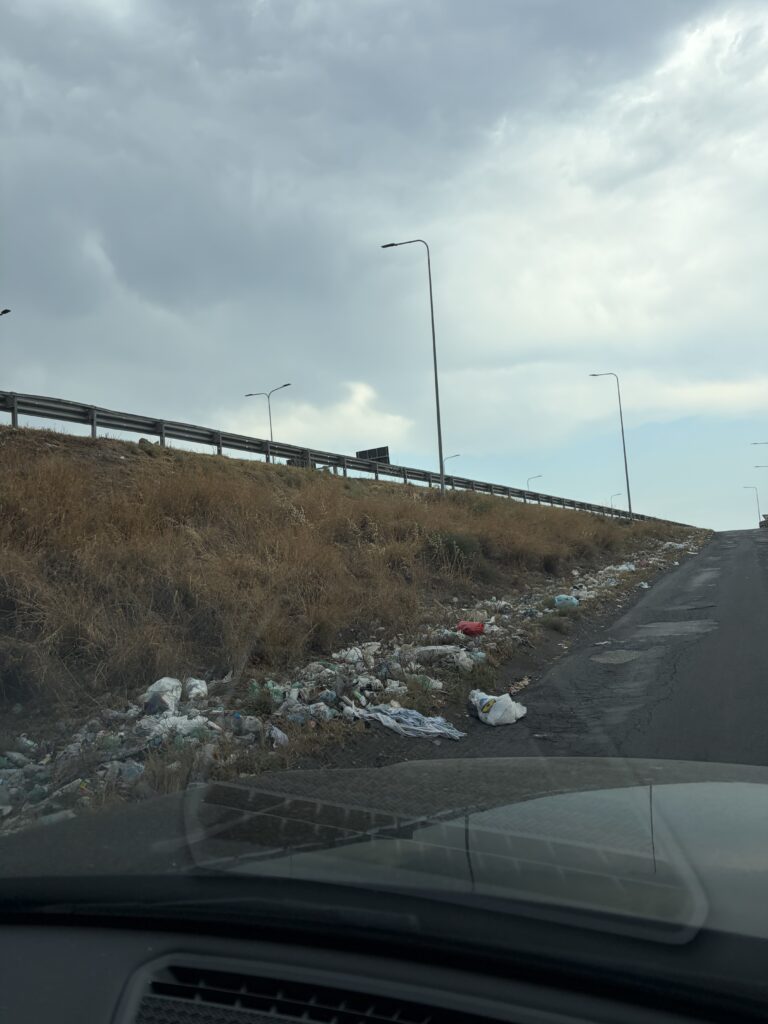
She also talked about the tension of loving Sicily while getting frustrated with certain attitudes here, not all Sicilians, but some, the type who “throw their cigarettes on the floor”. Honestly, the litter was one of the first things that shocked me when I arrived here: piled up along roadsides, dumped at the edge of fields, tossed straight out of car windows. It’s not a minor issue. When I asked Catanese friends about it, most pointed to the same thing: not enough public bins. If there’s nowhere to put your rubbish, it ends up on the ground.
Catania has tried to tackle this with a door-to-door recycling scheme, different materials collected on different days, with significant fines if you don’t comply. I’ll admit, the system is rigid and can be maddening. Put one glass bottle in with the tins, say, and they’ll refuse to collect the whole lot rather than just leaving that one item behind.
You’d be amazed at lengths people will go to just to avoid doing this properly. Earlier this year, Catania’s municipal police released CCTV footage of a dog dropping off a bag of rubbish in the San Giorgio district. Officials concluded the dog had been trained by its owner specifically to dodge the surveillance cameras set up to catch illegal dumping. “Ingenuity can never become an alibi for incivility”, the municipality wrote in a Facebook post.
It’s funny, I’ll admit, and I can only imagine how much work it would take to train cali to take the bins out. Ironically, that’s probably more effort than following the recycling rules in the first place. What it really comes down to is a shift in mentality, seeing the environmental upsides, thinking further ahead than the next five minutes.
“We have so many things here”, she adds. “We can make anything.”
So I asked her, finally: if you could say one thing to a young Sicilian thinking about leaving, what would it be?
She didn’t hesitate.
“Go. Leave. Do as much experience as you can, learn from other cultures, and when you come back try to make a difference”.
If someone asked me the same about young Brits, I’d say exactly the same thing.
Yes, those who leave might succeed. But maybe the real success is in what you bring back.
Alla prossima,
Nadia
P.s. here’s a glimpse into Cali and Kayla playing ❤️